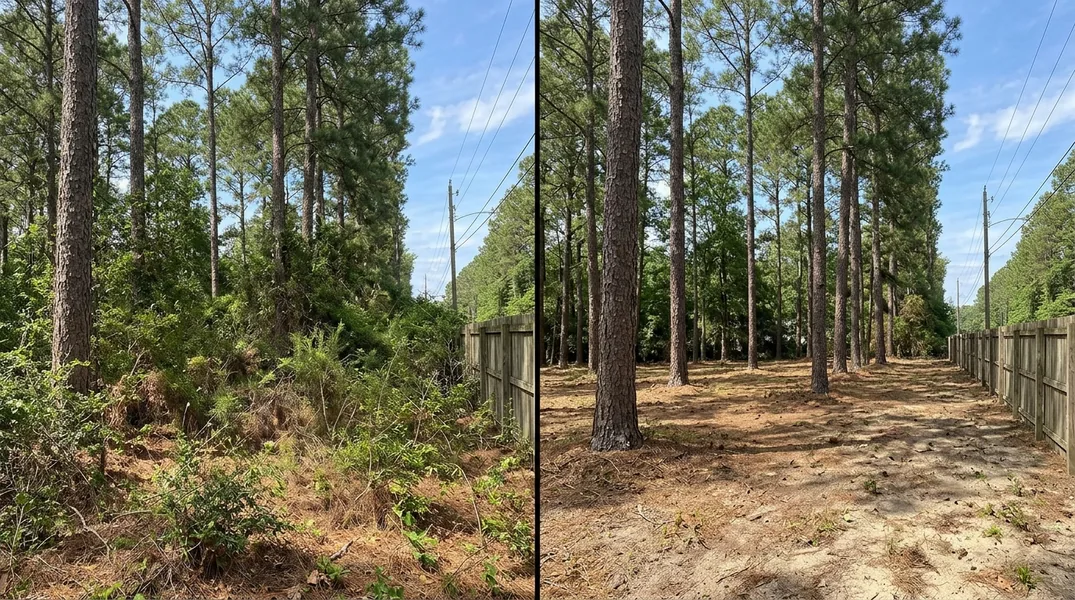
Understanding Water Oak Trees in Fayetteville
Water oak trees are a common sight throughout Fayetteville and the surrounding region. These medium-sized deciduous trees, scientifically known as Quercus nigra, are native to the southeastern United States and have adapted well to the local climate. They typically grow between 50 and 60 feet tall and are recognizable by their distinctive wedge-shaped leaves and dense branching patterns. Many homeowners appreciate water oaks for their shade and aesthetic appeal, but what many don't realize is that these trees come with significant structural vulnerabilities that can make them problematic on residential properties.
The water oak's popularity in the landscape comes from its ability to thrive in moist, poorly drained soils where other oak species struggle. This adaptation, however, is a double-edged sword. While water oaks excel in wet conditions, they develop weak wood structure and poor branch attachment angles that make them inherently unstable. The combination of rapid growth, weak branching architecture, and the tree's susceptibility to various diseases creates a perfect storm for failure. Understanding these characteristics is the first step toward making informed decisions about whether a water oak on your property is worth keeping or should be removed.
Common Water Oak Tree Problems and Structural Failures
One of the most prevalent issues with water oak trees is their tendency toward structural failure, particularly during storms or high winds. The wood of a water oak is considered soft compared to other oak species, and the tree's natural branching pattern creates weak crotches where branches meet the main trunk. These weak attachment points are the first places to fail when the tree experiences stress from wind, ice accumulation, or the weight of dense foliage. Homeowners in Fayetteville often discover this problem the hard way, after a branch has already crashed into their roof, vehicle, or power lines.
Beyond branch failure, water oaks are highly susceptible to decay and hollow oak tree conditions. The tree's weak immune system makes it vulnerable to fungal infections, wood-boring insects, and canker diseases. Once decay begins, it spreads rapidly through the heartwood, creating hollow sections that further compromise structural integrity. A hollow oak tree may appear healthy on the outside while being completely compromised internally. This hidden decay is particularly dangerous because homeowners may not realize the danger until the tree fails catastrophically. Additionally, water oaks are prone to splitting, especially when they develop included bark or when multiple trunks grow from a single base.
Storm damage is another significant concern for water oak owners. During heavy winds, ice storms, or hurricanes, water oaks consistently rank among the first trees to fail. The combination of weak wood, poor branch attachment, and the tree's height creates a recipe for disaster. Unlike more resilient oak species that might lose a branch or two, water oaks can experience complete structural failure, uprooting or snapping at the trunk. This makes them particularly problematic if they're located near homes, driveways, or property lines shared with neighbors.
Signs Your Water Oak Needs Removal
Recognizing the warning signs of a failing water oak is crucial for protecting your property and family. One of the most obvious indicators is the presence of large dead branches in the crown of the tree. These branches are no longer receiving nutrients and will eventually fall. If you notice dead wood that's been present for more than a season or two, it's a sign that the tree's overall health is declining. Similarly, if the tree is dropping branches regularly without any obvious storm activity, this suggests internal structural problems or disease progression. Leaning is another red flag, particularly if the lean has developed or worsened over time, as this indicates possible root failure or soil instability.
Visible signs of decay should never be ignored. Look for large cavities or hollow sections in the trunk, fungal fruiting bodies (mushroom-like growths) emerging from the bark, or areas of bark that are missing or peeling away. A free estimate from an experienced arborist can help you understand whether these symptoms indicate a tree that can be saved through Tree Trimming & Pruning or if removal is the safer choice. Other warning signs include sparse foliage, branch dieback, or the tree producing fewer leaves than in previous years. If multiple warning signs are present simultaneously, removal becomes increasingly necessary.
The location of your water oak also plays a critical role in the removal decision. Trees positioned directly over your home, garage, deck, or near property lines where failure could injure neighbors warrant more serious consideration for removal, even if they're not yet showing obvious signs of decline. The potential liability and damage risk simply outweigh the benefits of keeping a structurally compromised tree in a high-consequence location.
Water Oak Removal: What to Expect
Tree Removal of a large water oak is a complex operation that requires professional expertise and specialized equipment. The process begins with a careful assessment of the tree's size, location, and surrounding obstacles. An experienced arborist will determine the safest removal strategy, which might involve removing the tree in sections from the top down if it's located near structures or power lines. For trees in open areas, a complete felling might be possible, but this is only safe when adequate clearance is available. The entire process requires proper safety protocols, including the use of climbing equipment, rigging systems, and spotters to ensure no property damage occurs during the operation.
After the tree itself is removed, you'll need to address the remaining stump. Many homeowners choose Stump Grinding to completely eliminate the stump and allow the area to be replanted or landscaped. Without stump removal, the remaining wood can become a hazard, attract pests, or sprout new growth from the roots. The entire process from initial assessment through stump removal typically takes one to two days for a large tree, depending on size and complexity. Fayetteville Tree Service can handle all aspects of water oak removal from start to finish, ensuring the job is done safely and efficiently.
When to Call for Emergency Tree Service
If a water oak has already failed or is actively threatening your safety, Emergency Tree Service may be necessary. A tree that has partially fallen, is leaning dangerously, or has large branches hanging precariously over your home requires immediate professional attention. Never attempt to remove or cut down a damaged water oak yourself, as this can result in serious injury or property damage. Professional arborists have the training, equipment, and experience to safely handle emergency situations that would be far too risky for homeowners to tackle alone.
Storm damage is particularly common in Fayetteville during spring and summer months, and water oaks are often the first casualties. If a storm has damaged your water oak, calling for emergency service quickly prevents further deterioration and reduces the risk of additional failure. The longer a damaged tree sits, the more unstable it becomes. Emergency tree service providers can often respond quickly to stabilize dangerous situations and prevent injuries or additional property damage. If you're uncertain whether your water oak situation qualifies as an emergency, calling Fayetteville Tree Service at (472) 202-5930 can help you get immediate professional guidance.
Making the Decision: Keep or Remove Your Water Oak
Deciding whether to keep or remove a water oak comes down to weighing several factors: the tree's current health, its location relative to structures and property lines, your risk tolerance, and your long-term property plans. A young, healthy water oak in an open area away from buildings might be worth maintaining with regular Tree Trimming & Pruning to improve its structure and reduce failure risk. However, a mature water oak showing signs of decay, located over your home or near a neighbor's property, is a liability that's probably not worth keeping. The cost of removal now is almost always less than the cost of dealing with damage from a tree failure later.
If you're uncertain about your specific situation, the best approach is to have a professional assessment. Fayetteville Tree Service offers expert evaluation and can provide honest recommendations tailored to your property and circumstances. Contact us at (472) 202-5930 or request a free estimate to discuss your water oak concerns. Our experienced arborists can assess the tree's health, explain your options, and help you make an informed decision that prioritizes safety while respecting your property's landscape. Whether your water oak needs removal, pruning, or ongoing maintenance, we're here to help you manage this common but challenging tree species.
Looking for a professional tree service contractor in Fayetteville? Fayetteville Tree Service responds fast for all your tree service needs.
Get a Free QuoteOur services: Tree Removal · Tree Trimming & Pruning · Stump Grinding